The field of people analytics is wrestling with whether there’s any work left to do in a post-AI world. So have I.
Many products. One argument.
People analytics doesn’t just survive AI — it makes AI better. I built everything below to prove it.
Apps — the products · Stacks — the tech underneath · Parts — recurring patterns · Stats — the numbers. /portfolio for the full writeups.
DevPlane
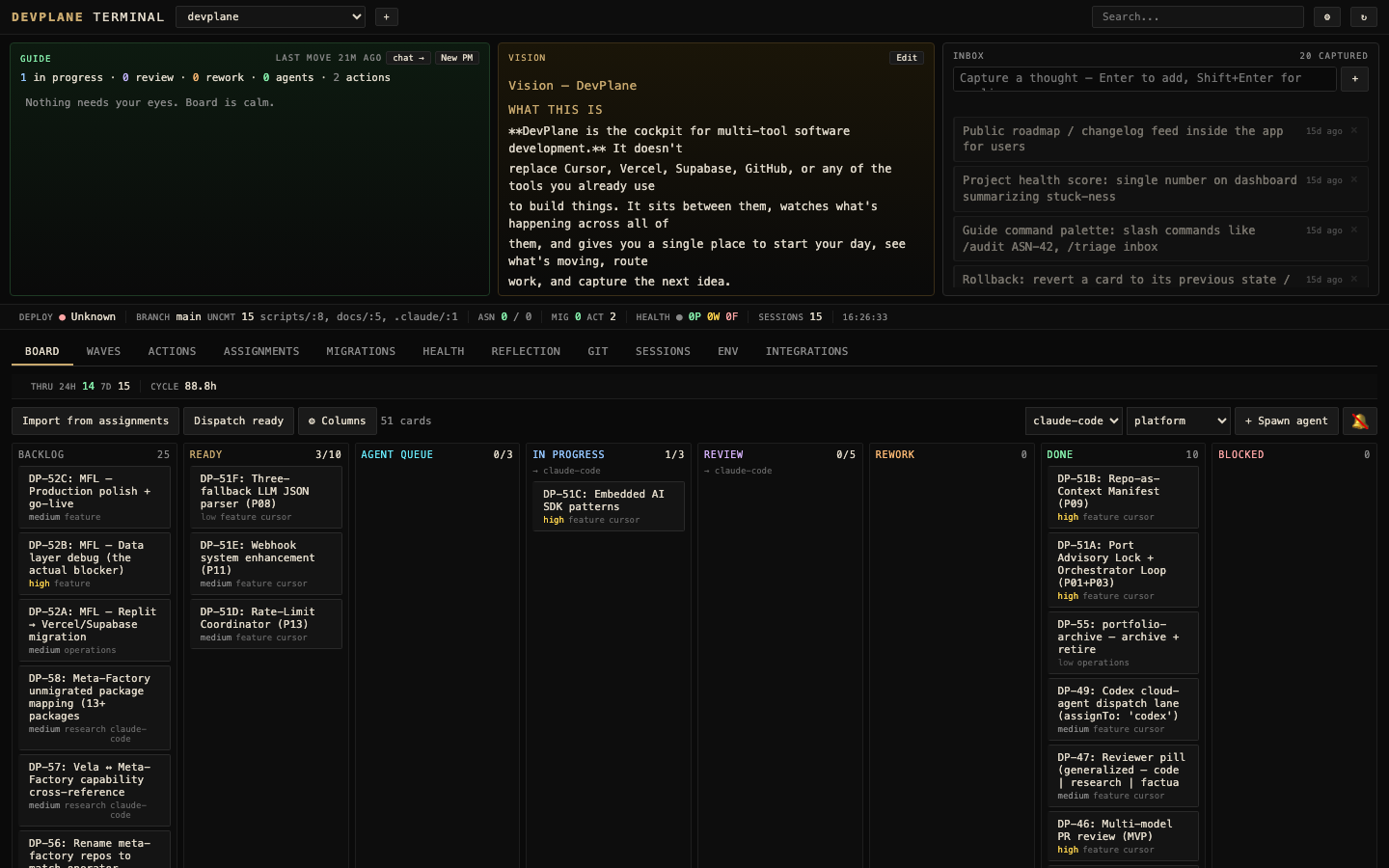
PrivateTwo products in one project. (1) A local cockpit for multi-tool software development — assignment registry, two-phase actor handoff, coordination-event log, MCP server, CLI, Chrome extension; the operator-side measurement layer AI coding tools' agent-side metrics miss. (2) The portfolio's shared engineering brain — pattern library, architecture maps, session handoffs, cross-project assignment registry, API registry, decision log, capabilities catalog, and the capability-architecture doctrine the whole portfolio is built against.
Fourth & Two
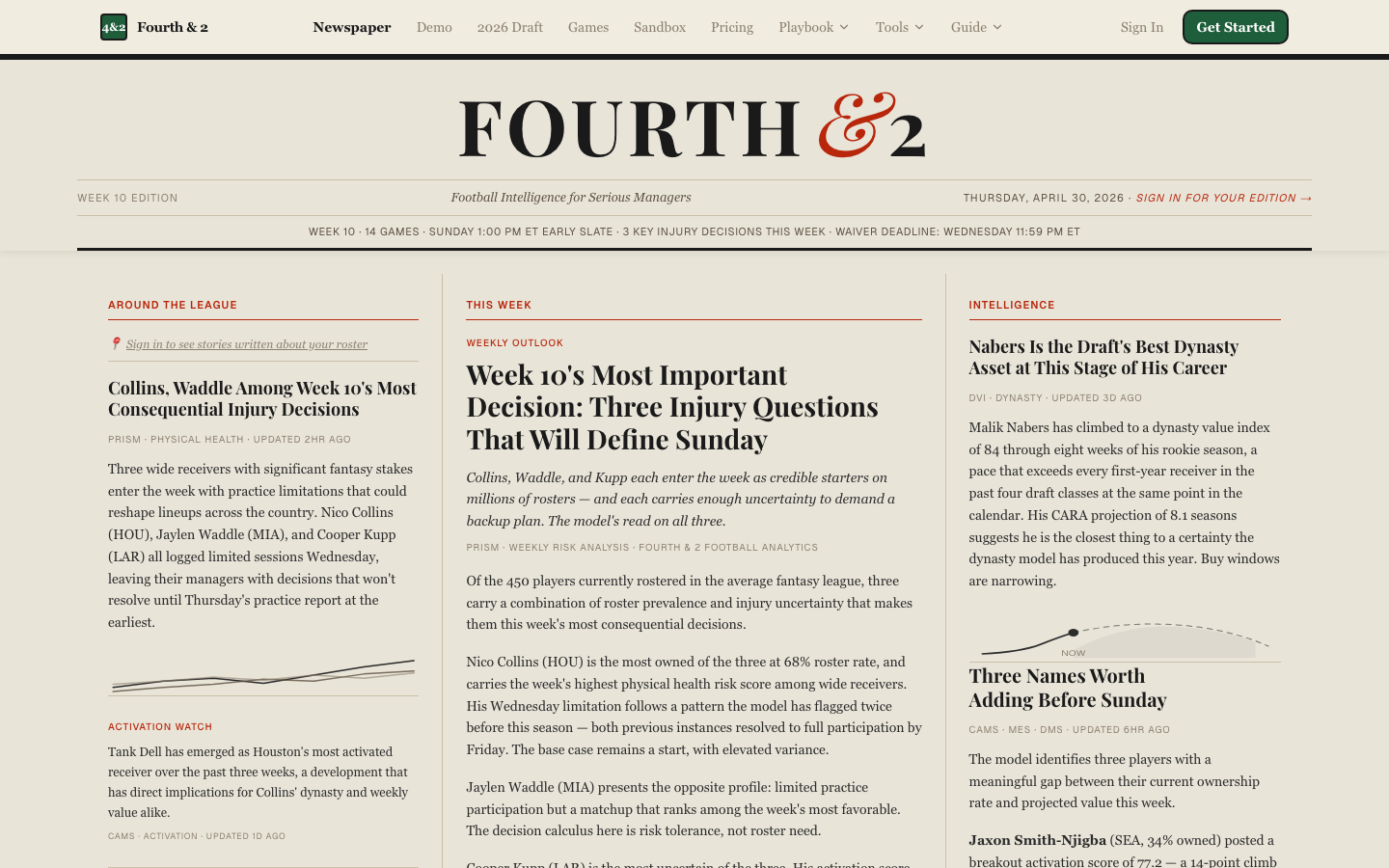
PrivateGridiron Platform — a fantasy football platform built around four converging efforts: a GM Command Center (lineup, waivers, trades, draft, rankings), a Python analytics API (PRISM and CAMS frameworks ported to football), an Insight Card system (PRISM trend / CAMS alignment / market-signal cards composed across surfaces), and Strategy League / Football IQ (a coaching-strategy game layered on fantasy leagues with a simulation engine).
Namesake
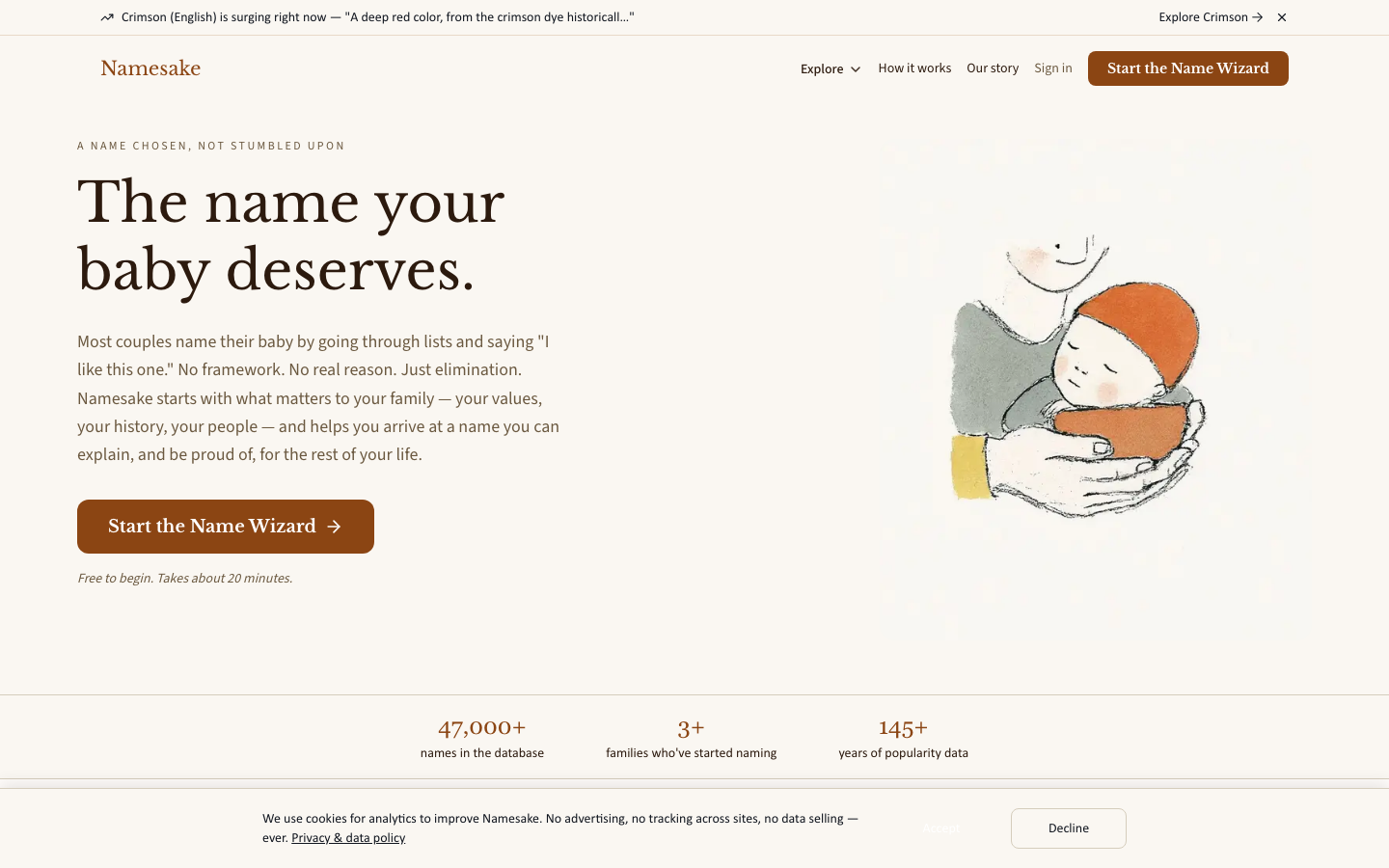
LiveA name chosen, not stumbled upon. Every baby-naming product helps parents find names; Namesake is the only one that helps them choose one. Built on twenty years of weekly search data, a per-name composite score (SSA stats × LLM-enriched meaning × cultural-event attribution), a tournament-bracket decision UX with village voting, and a cultural-diffusion research apparatus underneath.
Performix
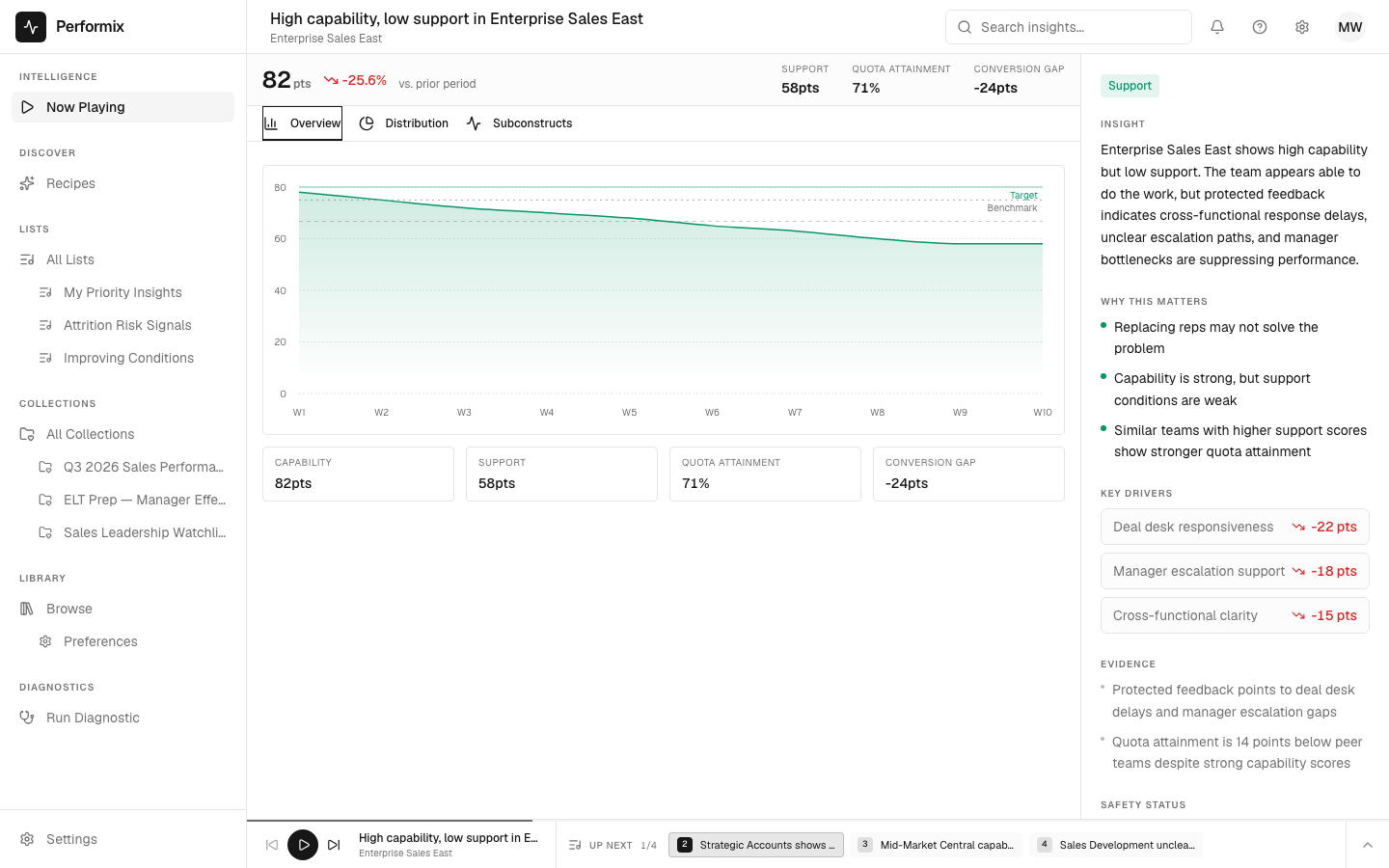
LiveA protected-feedback diagnostic for team performance. Scores teams on Capability / Alignment / Motivation / Support (CAMS), names the binding constraint, and renders one accountable action per team. Psychometric-first: the diagnostic engine is real measurement, not a language model. The foundation underneath — constructs, measures, evidence weights — is built by AI-assisted ingest of peer-reviewed I/O psychology and organizational behavior literature, which is the precondition for the product, not a gloss on top of it; AI is a consumer of that foundation, never the engine. Same instrument, three doors: sales-performance variance, AI-transformation readiness, post-acquisition integration. Early build; pre-chasm.
MetaFactory
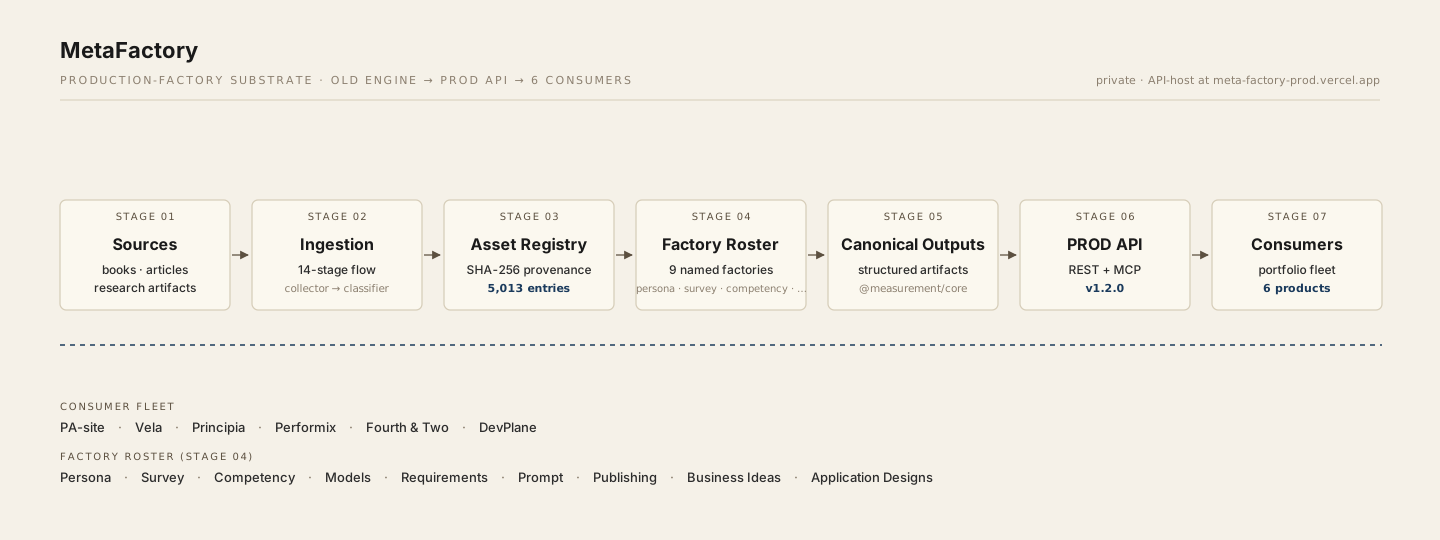
PrivateTwo-shell production-factory foundation for the portfolio — an engine (OLD, AI-controlled, no human UI) that ingests books and research at chapter-respecting fidelity and runs a roster of named factories (Persona Factory, Survey Factory, Competency Factory, Models Factory, Requirements Factory, Prompt Factory, Publishing Factory, Business Ideas Factory, Application Designs Factory) producing canonical outputs; and an API host (PROD, Vercel) that exposes a v1.2.0 REST + MCP contract plus a cross-portfolio library layer (Stream 7, ~944 records) the rest of the portfolio reads from.
People Analytics Toolbox
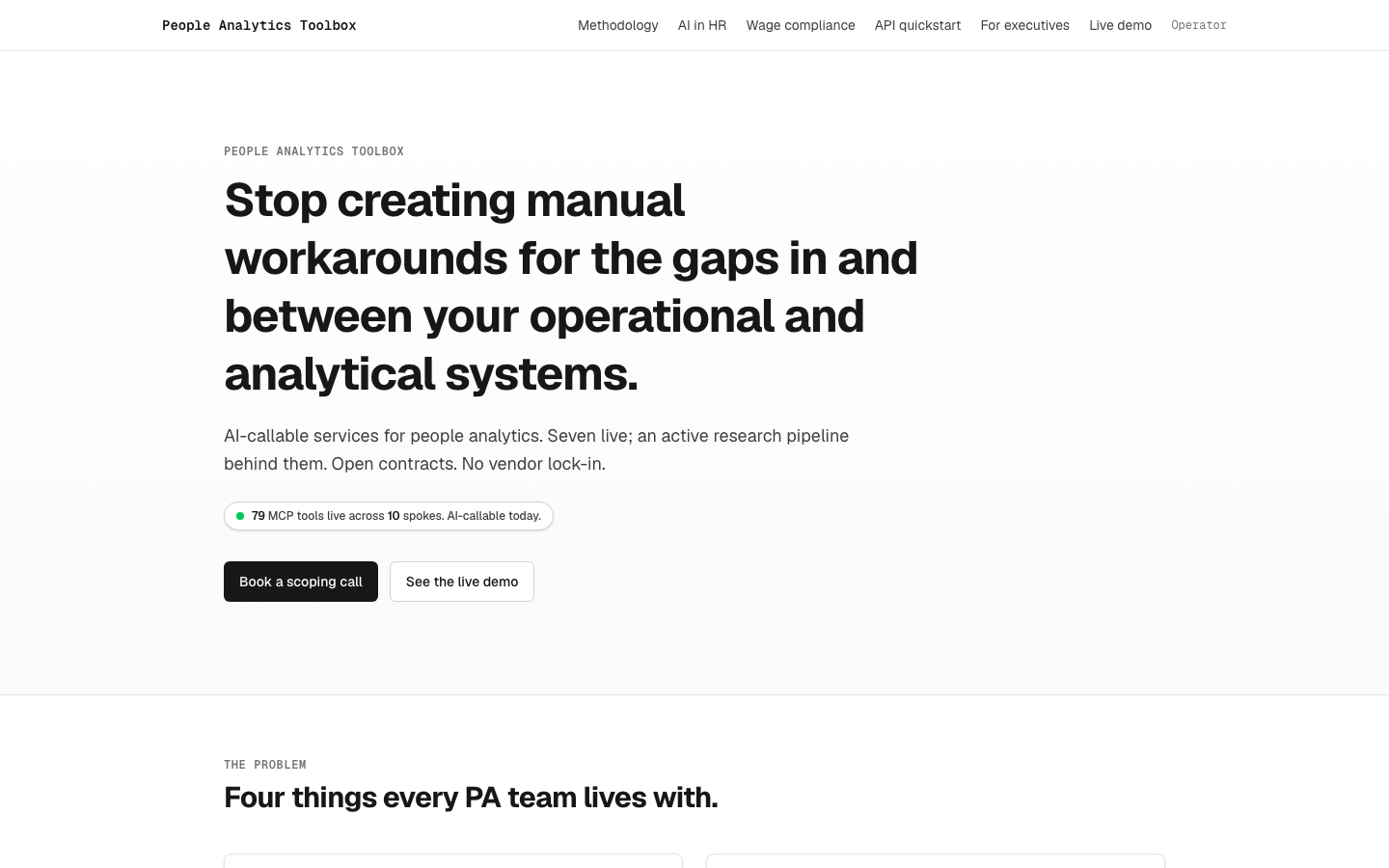
LiveIndependently-versioned analytical microservices for people analytics — psychometric diagnostics, preference modeling, privacy primitives, segmentation, statistical enrichment, compensation logic, decision forecasting, metadata-grounded codegen — deployed as a single Next.js application and exposed over two transports: HTTP for engineers, MCP for AI agents. One Vercel project, one Supabase project. The behavioral and statistical foundation consumer apps compose against.
Principia
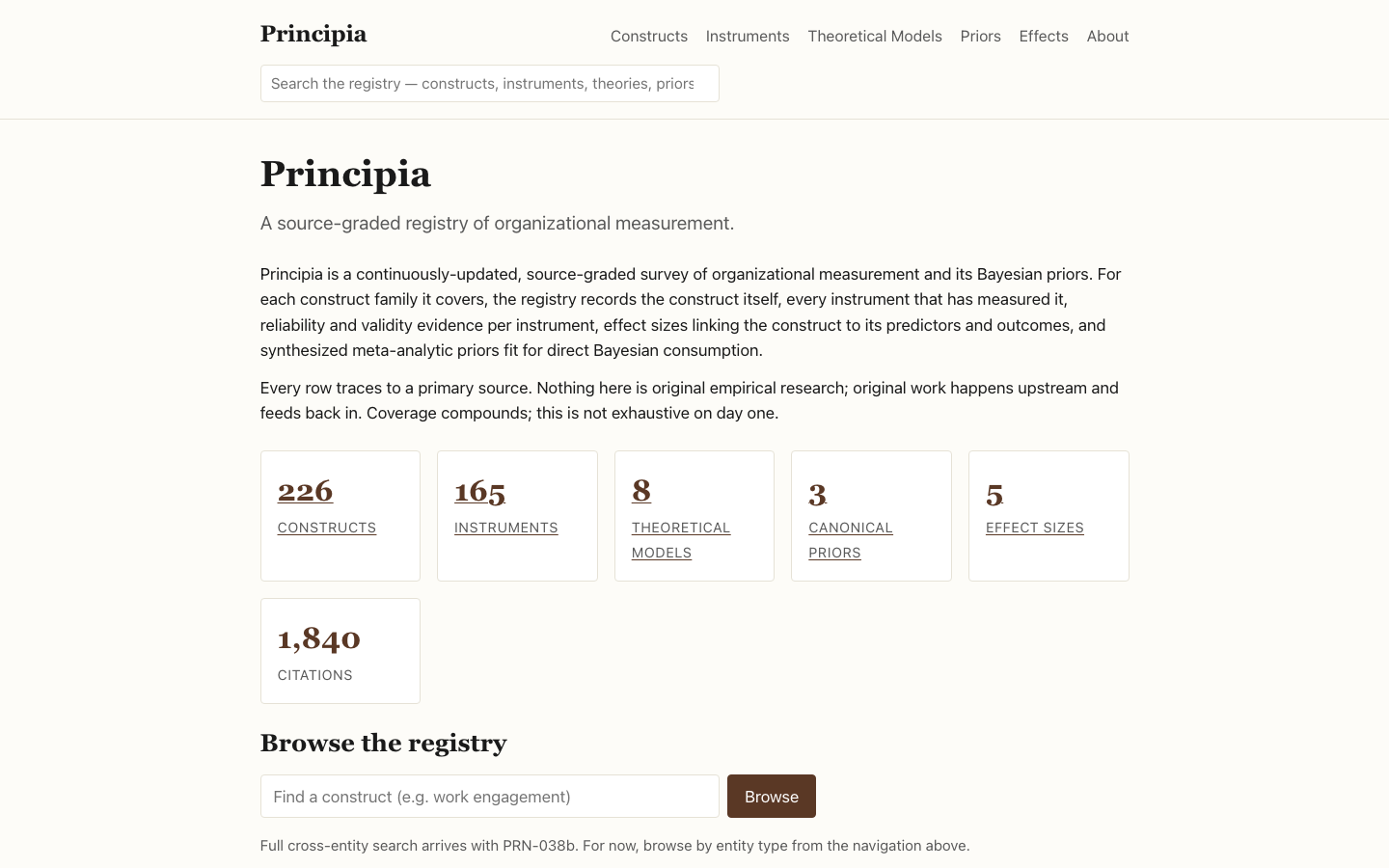
LiveThe continuously-updated, source-graded, citation-verified, Bayesian-prior-bearing registry of organizational science — a survey-not-original-research curation layer that sits on top of meta-factory's extraction pipelines and feeds canonical priors to the rest of the portfolio over a versioned REST + MCP contract.
Vela
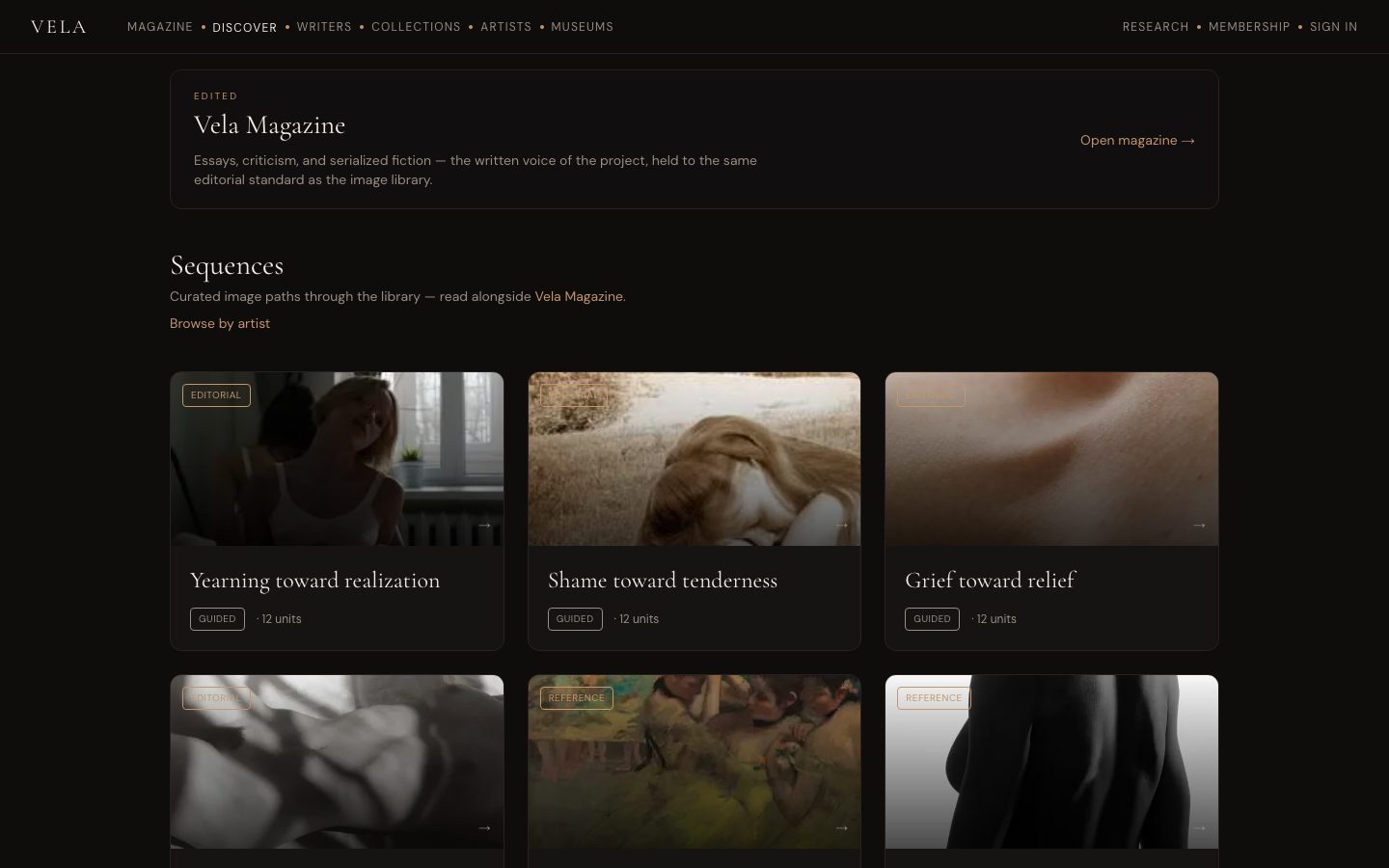
LiveA study of being human, read through four lenses — figurative art and the museum traditions, the vocabulary of emotion, literature (including the religious and contemplative inheritance), and the behavioral science of how people form, feel, and become. A magazine weaves them; adaptive intelligence learns how each reader moves through the material. The figurative-art player is the room a reader can enter first — one dimension positioned in a much broader project, all of it pointed at one work: helping people replace the belief-rooted thoughts and emotional patterns that work against their lives and communities with ones that work for them.
- Penwright
Penwright
PrivateAn AI-augmented authorship system — corpus control, packet-shaped composition, and a measurement framework that asks whether the writer is better with it, than without it, in six months.
The argument
They look unrelated — enterprise people analytics, coding tools, AI-augmented authorship, fantasy football, baby naming, figurative art. Each is an instance of one wager: that the science of measuring people is the manual the AI field needs (and vice versa).
And I built all of it — every product above is software I designed and shipped. I take on a few client builds, too: web apps and early-stage analytics applications with this same perspective.